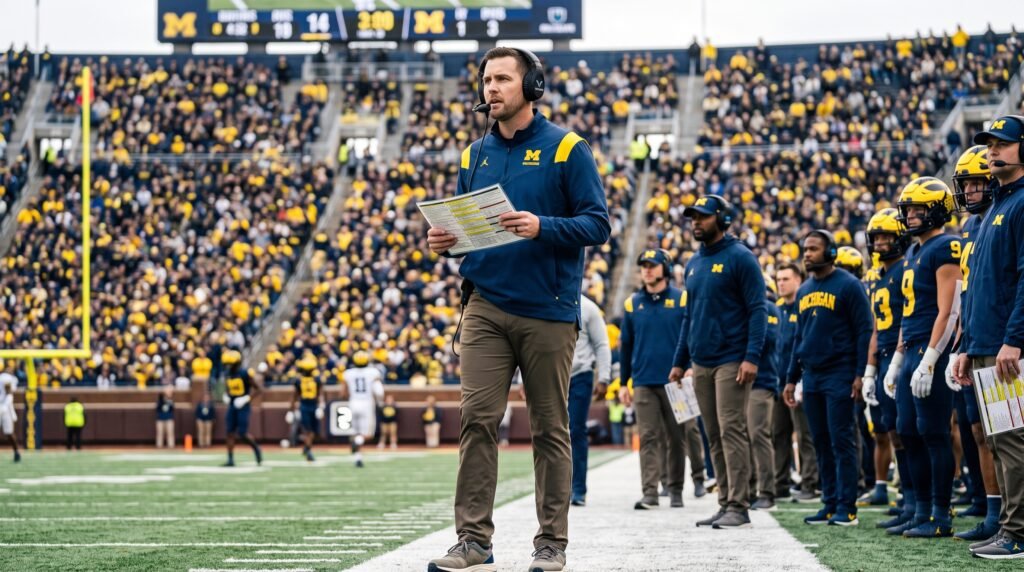

The phrase sherrone moore staffer has become a widely searched topic after the University of Michigan dismissed former head football coach Sherrone Moore following an investigation into his relationship with a staff member. Many people searching this term want a clear explanation of what happened, why it became such a major story, and what it means for college athletics.
The controversy extends beyond one individual. It raises important questions about workplace ethics, leadership responsibilities, institutional oversight, and the standards expected of coaches who supervise employees. Understanding the facts helps separate verified information from speculation and provides context for one of the most significant off-field stories in recent college football history.
Who Is Sherrone Moore?
Sherrone Moore built a strong reputation as a football coach before becoming Michigan’s head coach. After serving in several assistant coaching roles, he became offensive coordinator and later succeeded Jim Harbaugh as the Wolverines’ head coach.
Moore earned praise for his coaching ability, player development, and recruiting. His rise made him one of the most recognizable figures in college football. However, his coaching accomplishments were eventually overshadowed by events unrelated to the field.
As news surrounding the sherrone moore staffer investigation emerged, public attention shifted from football performance to questions about conduct and university policy.
Why Did the Sherrone Moore Staffer Story Become National News?
The story gained national attention because it involved a high-profile college football program and allegations concerning a relationship between a head coach and a staff member who reportedly worked within the football program.
According to the University of Michigan, an internal investigation found credible evidence of an inappropriate relationship that violated university policy governing supervisor-employee relationships. The university terminated Moore for cause following the investigation. Reports later indicated that investigators also concluded he had been untruthful during parts of the inquiry.
Because head football coaches hold significant authority over staff members, any alleged violation involving a subordinate is treated as a serious institutional matter.
Understanding the University’s Decision
Universities generally maintain policies designed to prevent conflicts of interest and protect employees from situations where unequal power dynamics may exist.
When a supervisor has a romantic relationship with someone they oversee, several concerns can arise:
- Potential conflicts of interest
- Questions about favoritism
- Workplace fairness
- Professional boundaries
- Compliance with institutional policies
In Michigan’s case, the university stated that the decision was based on findings from its investigation rather than on rumors or public speculation. The termination letter reportedly cited both the inappropriate relationship and dishonesty during the investigation as grounds for dismissal.
Who Was the Staff Member?
Public reporting identified the staff member as Paige Shiver, who served as an executive assistant within the Michigan football program. She later became a central figure in the investigation and subsequent legal proceedings.
While her identity has been widely reported by major news organizations, much of the personal information surrounding the case remains private. Responsible reporting focuses on verified facts rather than speculation about personal matters.
This distinction is important because many online discussions have mixed confirmed information with unverified claims.
Timeline of the Sherrone Moore Staffer Investigation
Early Allegations
Reports indicate concerns regarding the relationship surfaced before Moore’s dismissal. Internal complaints and reports eventually led university officials to examine the matter more closely.
Internal Investigation
Michigan conducted an internal investigation into allegations involving the relationship. The investigation reviewed available evidence, interviewed individuals, and examined whether university policies had been violated.
Termination
Following the investigation, Michigan announced that Sherrone Moore had been terminated for cause after finding credible evidence of an inappropriate relationship with a staff member. The university later released documents indicating investigators also believed Moore had not been truthful during interviews.
Legal Developments
The controversy did not end with Moore’s dismissal. Subsequent legal proceedings involving both Moore and the former staff member generated additional headlines, including lawsuits and criminal proceedings related to events after his firing.
Why Supervisor-Employee Relationships Receive Special Attention
Many organizations prohibit or closely regulate relationships between supervisors and employees.
The primary reason is the imbalance of authority.
A supervisor often influences:
- Promotions
- Job assignments
- Performance evaluations
- Hiring decisions
- Workplace opportunities
Even when both individuals describe a relationship as consensual, organizations may still determine that the power imbalance creates unacceptable professional risks.
For universities, especially those with nationally recognized athletic departments, maintaining clear ethical standards is considered essential for protecting employees and preserving institutional credibility.
Leadership Expectations in College Athletics
College football coaches oversee much more than games.
Modern head coaches manage:
- Large coaching staffs
- Administrative personnel
- Recruiting operations
- Player development
- Public relations
- Compliance responsibilities
Because of these responsibilities, universities often expect coaches to serve as representatives of institutional values both on and off the field.
The sherrone moore staffer case demonstrates how personal conduct can become a professional issue when it intersects with workplace policies.
The Role of Institutional Oversight
Another important aspect of this story involves questions about how universities respond to early warning signs.
Subsequent reporting suggested athletic department officials had received concerns before Moore’s dismissal. Investigations later examined whether earlier intervention could have prevented the situation from escalating.
This has led to broader discussions about:
- Reporting procedures
- Human resources oversight
- Internal investigations
- Leadership accountability
- Athletic department governance
These issues affect not only Michigan but colleges across the country.
Separating Facts From Online Rumors
One reason the sherrone moore staffer story became difficult to follow is the volume of rumors shared across social media.
When evaluating information, readers should prioritize:
Official University Statements
Universities typically release verified information regarding employment decisions and investigations.
Court Records
Legal filings often provide factual details supported by documentation.
Established News Organizations
Reputable outlets verify information through multiple sources before publication.
Avoid Anonymous Claims
Social media frequently spreads unverified allegations that later prove inaccurate or incomplete.
Sticking to confirmed reporting helps avoid misunderstanding complex situations.
How the Story Affected Michigan Football
Off-field controversies often have significant consequences for athletic programs.
Potential impacts include:
- Leadership changes
- Recruiting uncertainty
- Staff restructuring
- Public scrutiny
- Increased media attention
Although football programs are accustomed to intense public interest, leadership controversies can create instability that extends beyond a single season.
For Michigan, the focus shifted from competitive goals to organizational governance and institutional accountability.
Lessons for Sports Organizations
The controversy highlights several broader lessons applicable across sports organizations.
Clear Workplace Policies Matter
Written policies establish expectations before problems arise.
Early Reporting Is Important
Organizations benefit when employees can report concerns without fear of retaliation.
Investigations Require Independence
Objective investigations help preserve fairness and public confidence.
Leadership Carries Additional Responsibility
Individuals in positions of authority are generally held to higher professional standards because their decisions affect employees throughout an organization.
Why the Story Continues to Draw Interest
People continue searching sherrone moore staffer because the story combines several topics that attract sustained public attention:
- College football
- Leadership ethics
- University governance
- Employment policies
- Legal developments
Each new court filing or investigative report has renewed public interest, making the case one of the most discussed off-field stories involving a major college football program.
What Readers Should Take Away
The central issue is not simply that a relationship existed. Rather, the controversy centers on whether that relationship violated workplace policies, whether organizational leaders responded appropriately, and whether those involved were truthful during the investigation.
These questions are common in many professional workplaces—not only in sports—and illustrate why organizations establish rules regarding supervisor-employee relationships.
Understanding these principles provides a more accurate picture than focusing solely on headlines or social media discussions.
Conclusion
The sherrone moore staffer story represents far more than a headline about a college football coach. It reflects the importance of workplace ethics, institutional accountability, and leadership responsibilities within major athletic programs.
While Sherrone Moore’s coaching career included notable accomplishments, the investigation into his relationship with a staff member ultimately became the defining event of his tenure at Michigan. As legal proceedings and institutional reviews have continued, the case has remained a reminder that professional conduct, transparency, and compliance with organizational policies are essential for leaders at every level of college athletics.